How ABA Therapy Uses Play to Teach Real Skills
Play isn't just fun — it's one of the most powerful tools in ABA therapy. Here's how naturalistic, play-based teaching leads to real, lasting developmental progress.
When most people imagine behavioral therapy, they picture flashcards, a table, and a therapist running repetitive drills. Modern, high-quality ABA therapy looks nothing like that. It looks like playing.
The shift toward naturalistic, play-based ABA has been one of the most important developments in the field — and the science behind it is clear: children learn faster, generalize skills better, and enjoy therapy more when learning happens inside activities they love.
Why Play Works
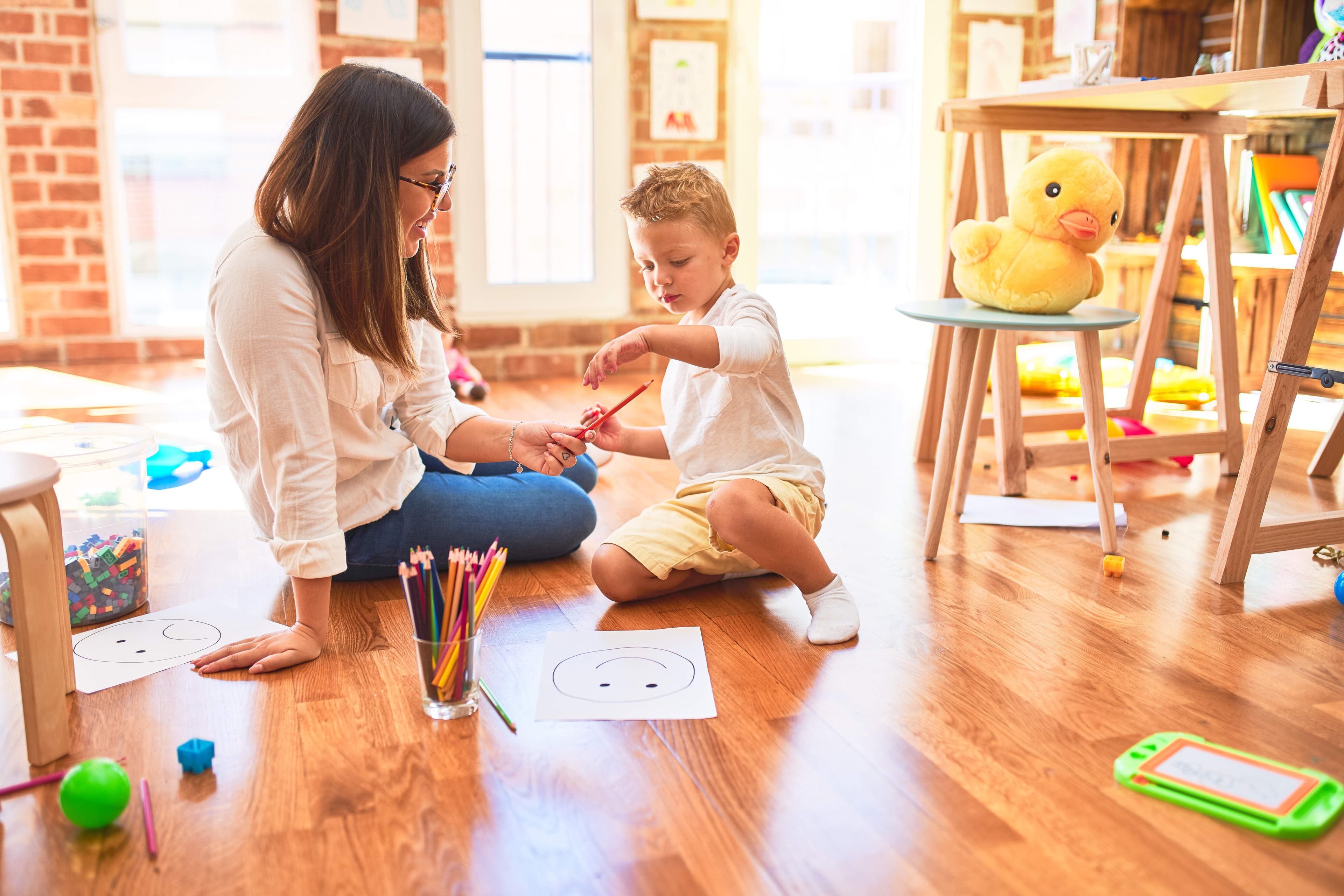
Children are wired to learn through play. It is their native language. When an RBT sits on the floor building blocks with a child, they are not just keeping the child busy — they are engineering dozens of teaching opportunities in a single session. Requesting a block (communication). Waiting for a turn (impulse control). Reacting when the tower falls (emotional regulation). Celebrating together (social connection).
All of those skills are targets in a well-designed ABA program. Play just makes the teaching invisible.
Naturalistic Teaching vs. Discrete Trial Training
Most ABA programs today use a combination of two approaches: Naturalistic Environment Teaching (NET) and Discrete Trial Training (DTT). NET is the play-based approach — skills are taught within the flow of everyday activities and child-preferred play. DTT is a more structured format used for specific skills that need focused repetition, like learning to identify letters or match objects.
At Courageous Hearts, we blend both based on what each child needs. Some skills are best taught at the table. Most are best taught on the living room floor.
What This Looks Like in a Session
A session might begin with the child choosing their favorite activity — trains, art, bubbles, an iPad game. The RBT joins in, following the child's lead while subtly introducing target skills. If the goal is requesting, the therapist might pause and wait for the child to say or sign 'more' before continuing. If the goal is joint attention, the therapist might pause to point at something and wait for the child to look and share the moment.
Every reinforcement is immediate and natural — more play, more praise, more of whatever the child finds motivating. Over time, skills that once required deliberate prompting become spontaneous.
What Parents Can Do at Home
Play-based ABA does not stop when the session ends. One of the most powerful things parents can do is carry the same strategies into everyday life. If your child is working on requesting, create natural opportunities throughout the day — hold the cereal box just out of reach, pause the video, wait at the door — and celebrate every communication attempt.
Your BCBA and RBT will teach you exactly which strategies to use and how. Parent training is not an add-on at Courageous Hearts. It is built into every program.
Ready to get started?
Our team is here to answer your questions and guide your family through every step.